
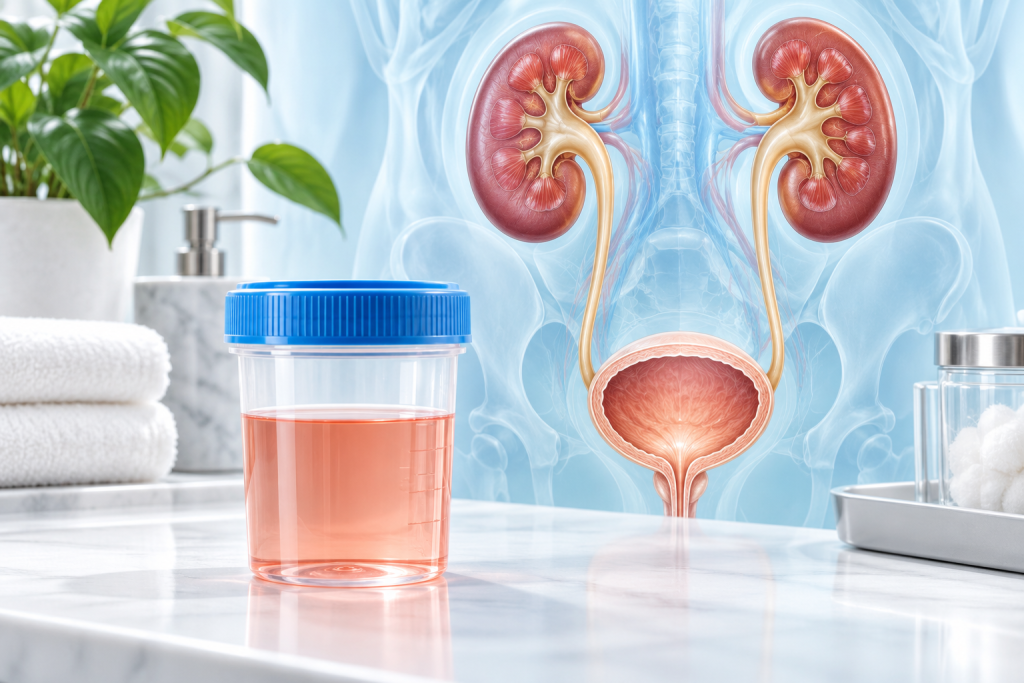
Blood in the Urine Without Pain: Why It Still Needs Checking
Noticing pink, red or brown urine can be alarming. However, when there is no pain or burning, some people postpone seeking help, especially if the colour returns to normal.
Blood in the urine, called haematuria, deserves medical assessment even when it is painless or appears only once. Sometimes blood is visible; in other cases, small amounts are identified through urine testing.
Several conditions can cause bleeding
Possible causes include urinary infections, kidney stones, prostate enlargement and other urinary tract conditions. Cancer is also among the causes a doctor may need to investigate. Urine colour alone cannot establish the diagnosis. Depending on the assessment, your doctor may recommend urinary tract infection treatment, investigations for stones or another approach. Avoid taking leftover antibiotics or assuming a previous infection explains a new episode.
Prepare a clear symptom history
Write down when you first noticed the change, whether it happened repeatedly and whether you saw clots. Mention fever, pain, difficulty urinating, recent injury or previous urinary procedures.
Bring a current medicine list, including any blood thinners. Do not stop prescribed medicines independently.
A history of kidney stone treatment is useful information, but fresh bleeding still needs assessment rather than an assumed explanation.
Understand why investigations may be recommended
Your clinician may suggest urine tests, blood tests, imaging or cystoscopy, which allows examination inside the bladder using a small camera. The selection depends on your history and risk factors.
Ask what each test is intended to establish, how to prepare and when results will be discussed. Further investigation does not mean cancer has been diagnosed; it helps determine whether care such as urological cancer assessment and treatment is necessary.
Know when to seek urgent help
Heavy bleeding, inability to urinate because of clots, severe pain, fever, faintness or marked weakness require urgent medical attention.
Even if visible bleeding stops, arrange a review. At Credence Urology Clinic in Ghatkopar, Dr. Bhargav Shah can assess your symptoms and advise on appropriate investigations and follow-up.
Frequently Asked Questions
- Should I see a doctor if blood appears only once?
Yes. Visible blood in the urine needs assessment even if it happens once, causes no pain or disappears afterwards.
- Does blood in the urine always mean cancer?
No. Infection, stones, prostate enlargement and other conditions can cause bleeding. Cancer is one possible cause doctors may investigate.
- What tests might my doctor recommend?
Depending on your history and risk factors, assessment may include urine tests, blood tests, imaging or cystoscopy to examine the bladder.
- Should I stop taking blood thinners if I notice bleeding?
Do not stop prescribed medicines independently. Tell your doctor about the bleeding and provide a complete medicine list.
- When should I seek urgent medical help?
Seek urgent care for heavy bleeding, clots preventing urination, severe pain, fever, faintness or marked weakness.