
Why Kidney Stone Analysis Matters After You Pass a Stone
Passing a kidney stone can bring relief, especially after an episode of pain. However, the end of the pain does not always mark the end of your care. Understanding what the stone is made of can help your urologist plan follow-up and discuss ways to reduce the chance of another episode.
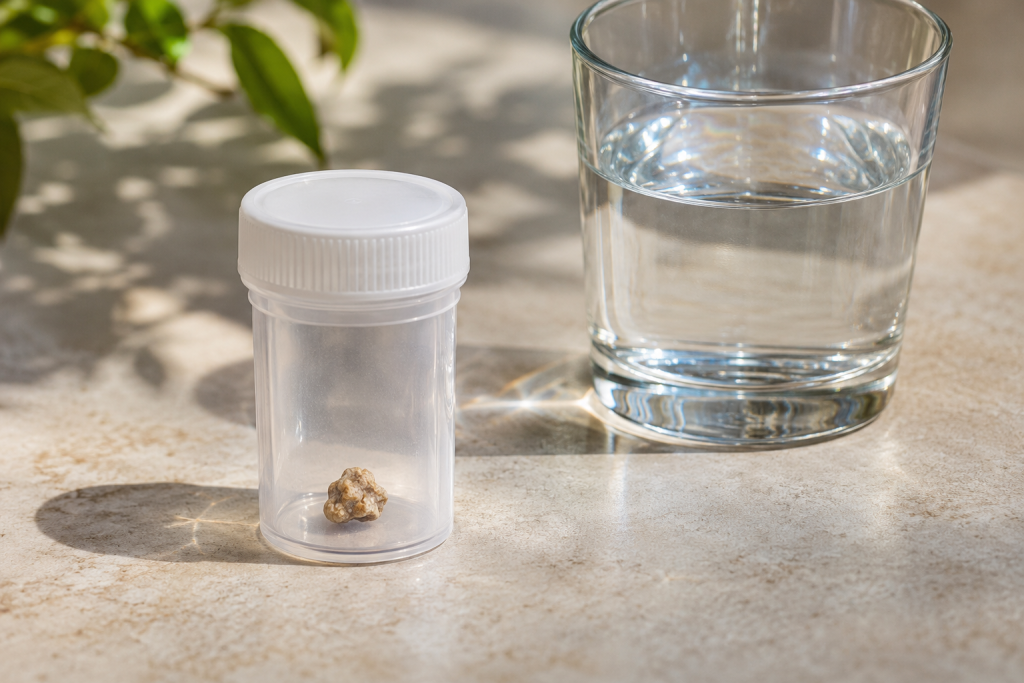
If you can collect a stone that passes naturally, contact your clinic for instructions on storing and bringing it for analysis.
What can kidney stone analysis reveal?
Kidney stones can contain different substances, including calcium oxalate and uric acid. Their colour or appearance cannot reliably establish their composition. Laboratory analysis gives your clinician more useful information when discussing prevention.
After kidney stone removal, ask whether a fragment was collected and when the report will be available. If you could not collect a stone, assessment can still begin with your medical history, imaging and previous reports.
Why prevention advice should be individual
Advice that helped someone else may not suit your stone type. Avoiding all calcium-rich foods, for example, is not a universal recommendation. For some people with calcium oxalate stones, adequate calcium from food forms part of prevention.
Your clinician may discuss drinking habits, sodium intake and other dietary factors. If you have kidney disease, heart disease or a prescribed fluid restriction, ask for an individual fluid goal.
Keep a simple record of your usual meals, drinks and supplements. This can make the discussion more practical than trying to recall everything during the appointment.
What if a stone is still present?
Treatment depends on factors such as stone size, location, symptoms and whether urine flow is affected. Ask what makes monitoring, medication or laser treatment for kidney stones appropriate in your situation.
Seek urgent medical care for fever or chills with stone symptoms, inability to pass urine, uncontrolled pain or persistent vomiting.
Planning follow-up at Credence
For kidney stone treatment in Ghatkopar, bring scan reports, discharge notes and previous stone results to Credence Urology Clinic. Mention earlier episodes and any changes you have already made.
Your kidney stone treatment plan should make the next steps clear, including whether you need further tests, imaging or a prevention review.
Frequently Asked Questions
- Should I save a kidney stone that I pass?
If you can collect it safely, ask your clinic how to store and bring it for analysis. - Can kidney stones return after treatment?
Yes. Follow-up and an individual prevention plan may help reduce recurrence. - Does everyone need a 24-hour urine test?
No. Your clinician may recommend it based on recurring stones or other risk factors. - Should I stop eating calcium-rich foods?
Do not eliminate them independently. Ask what is appropriate for your stone type. - Does being pain-free mean the stone has passed?
Not necessarily. Follow your clinician’s advice about confirming passage or arranging imaging.